

SUMMARY:
- Drought conditions (D1–D4) increased to 33% of the state, up from 24% four weeks ago; statewide reservoir storage decreased to 73.9% full, down from 75.6% four weeks ago, about 6 percentage points below normal for this time of year.
- We are now a La Niña Advisory with a 55% chance of La Niña conditions continuing into the January-March season.
- Most of the state is projected to be in drought over the next three months.
I wrote this article on November 3, 2025
Out yonder in the Pacific Ocean is something scientists are referring to as The Blob. As a fan of horror movies (including 1958’s The Blob and John Carpenter’s excellent The Thing from 1982), calling something “The Blob” does not portend good things.
The Blob refers to an oceanic heat wave in the Pacific, affecting weather along the Pacific coast and, presumably, Texas. This marine heat wave has raised water temperatures by 9 degrees Fahrenheit above average for this time of year. On top of all this is La Niña. It’s unclear if the collision of The Blob and La Niña is an epic battle akin to Godzilla v. Kong, thus canceling out their effects, or if they will work together to fight a Mechagodzilla possessed by Ghidorah’s consciousness.
Ironically, the warming may be due to efforts to reduce air pollution, both in global ship traffic and in China. Air pollution has collectively resulted in about 0.5 degrees Celsius (1.8 degrees Fahrenheit) of cooling. Addressing non-carbon-equivalent air pollution results in additional warming. Increased warming is higher in higher latitudes, thus decreasing wind energy, which may be impacting weather in the region and affecting the jet stream. Research is ongoing to better understand these dynamics and what it might mean for our weather.

Figure 1: Attack of The Blob (source).
Except for blotches of five or more inches in small parts of North-Central and East Texas, most of us saw less than three or two inches in October (Figure 2a). Except for the El Paso area and a few random blotches, the state saw less than normal amounts of rainfall (Figure 2b).

Figure 2a: Inches of precipitation that fell in Texas in October 2025 (modified from source). Note that cooler colors indicate lower values and warmer colors indicate higher values.

Figure 2b: Rainfall as a percent of normal for October 2025 (modified from source).
The amount of the state under drought conditions (D1–D4) increased from 24% four weeks ago to 33% today (Figure 3a), with degradation (and some improvements) across the state (Figure 3b). Extreme drought or worse rose to 4% of the state from 3% four weeks ago, while exceptional drought declined to 0.15% (Figure 3a). In all, 77% of the state is abnormally dry or worse (D0–D4; Figure 3a), up from 63% four weeks ago.

Figure 3a: Drought conditions in Texas according to the U.S. Drought Monitor (as of October 28, 2025; source)

Figure 3b: Changes in the U.S. Drought Monitor for Texas between September 30, 2025, and October 28, 2025 (source).
The North American Drought Monitor, which was not updated last month (a victim of the government shutdown?), shows continued drought in the American Southwest with smatterings in the northern part of the continent (Figure 4a). The Rio Conchos basin in Mexico, which confluences with the Rio Grande just above Presidio and hosts the largest tributary to the Lower Rio Grande, remains in moderate to extreme drought (Figure 4a). That giant blob of drought in the American Southwest is troubling since it portends larger, more systematic conditions that could (and are expected to) spill over into the land of Tex-Mex.
Conservation storage in Elephant Butte Reservoir—an important source of water for the El Paso area—increased to 4.3% full from 3.4% four weeks ago (Figure 4b), about 20 percentage points below a rather pitiful median storage of 22 percent full. Current levels in the reservoir are flirting with lows not seen in at least 35 years.
Combined conservation storage in the Amistad and Falcon reservoirs increased from 26.2% full four weeks ago to 26.5% full today, about 20 percentage points below normal for this time of year (Figure 4c).

Figure 4a: The North American Drought Monitor for August 31, 2025 (source). Most flows in the Rio Grande from Big Bend downstream source from the Rio Conchos in Mexico.


Figure 4b: Reservoir storage in Elephant Butte Reservoir (upper graph) since 2023 with the median, min, and max for measurements from 1990 through 2024 (lower graph) (graphs from Texas Water Development Board).


Figure 4c: Reservoir storage in Amistad and Falcon reservoirs (upper graph) since 2023 with the median, min, and max for measurements from 1990 through 2024 (lower graph) (graphs from Texas Water Development Board).
Basins across the state continue to host flows over the past week below historical 25th, 10th, and 5th percentiles (Figure 5a). Statewide reservoir storage is down from 75.6% full four weeks ago to 73.9% today, about 6 percentage points below normal for this time of year (Figure 5b). The reservoir marked in reddish-orange in the Dallas-Fort Worth area (the persimmon in a sea of blueberries) is New Terrell City Lake and has dropped from full in early March 2024 (Figure 5c). The Lake is no longer used for water supply and appears to be undergoing long-term maintenance work.
My (drumroll please) “Hydrograph of the Month” is Lake Corpus Christi in honor of the Corpus Christ pausing construction on a seawater desalination plant (Figure 5d). Reservoir levels in Choke Canyon are at historic lows (and heading lower).

Figure 5a: Parts of the state with below-25th-percentile seven-day average streamflow as of November 3, 2025 (map modified from U.S. Geological Survey).


Figure 5b: Statewide reservoir storage (upper graph) since 2023 compared to statistics (median, min, and max) for statewide storage from 1990 through 2024 (lower graph) (graphs from Texas Water Development Board).

Figure 5c: Reservoir storage as of November 3, 2025, in the major reservoirs of the state (modified from Texas Water Development Board).


Figure 5d: Hydrograph of the Month—Reservoir storage for Lake Corpus Christi (graph from Texas Water Development Board).
We are now under a La Niña Advisory (that is, La Niña is here) for the fall-winter season (Figure 6a), with a 55% chance that these conditions will continue into the January through March season (Figure 6b). This La Niña is projected to be a weak one, but it sure seems to be affecting our weather (and the projections thereof).

Figure 6a. Forecasts of sea-surface temperature anomalies for the Niño 3.4 Region as of September 19, 2025 (modified from Climate Prediction Center and others). “Range of model predictions -1” is the range of the various statistical and dynamical models’ projections minus the most outlying upper and lower projections. Sometimes those predictive models get a little cray-cray.

Figure 6b. Probabilistic forecasts of El Niño, La Niña, and La Nada (neutral) conditions (graph from Climate Prediction Center and others).
The new U.S. Seasonal Drought Outlook shows drought remaining and developing through January throughout Texas, except for parts of the High Plains (Figure 7a). The three-month temperature outlook projects (surprise, surprise [yawn…]) above-average temperatures for most of the state (Figure 7b), while the three-month precipitation outlook favors below-normal rainfall for most of the state south of the Red River region (Figure 7c).

Figure 7a: The U.S. Seasonal Drought Outlook for November 1, 2025, through January 31, 2026 (source).
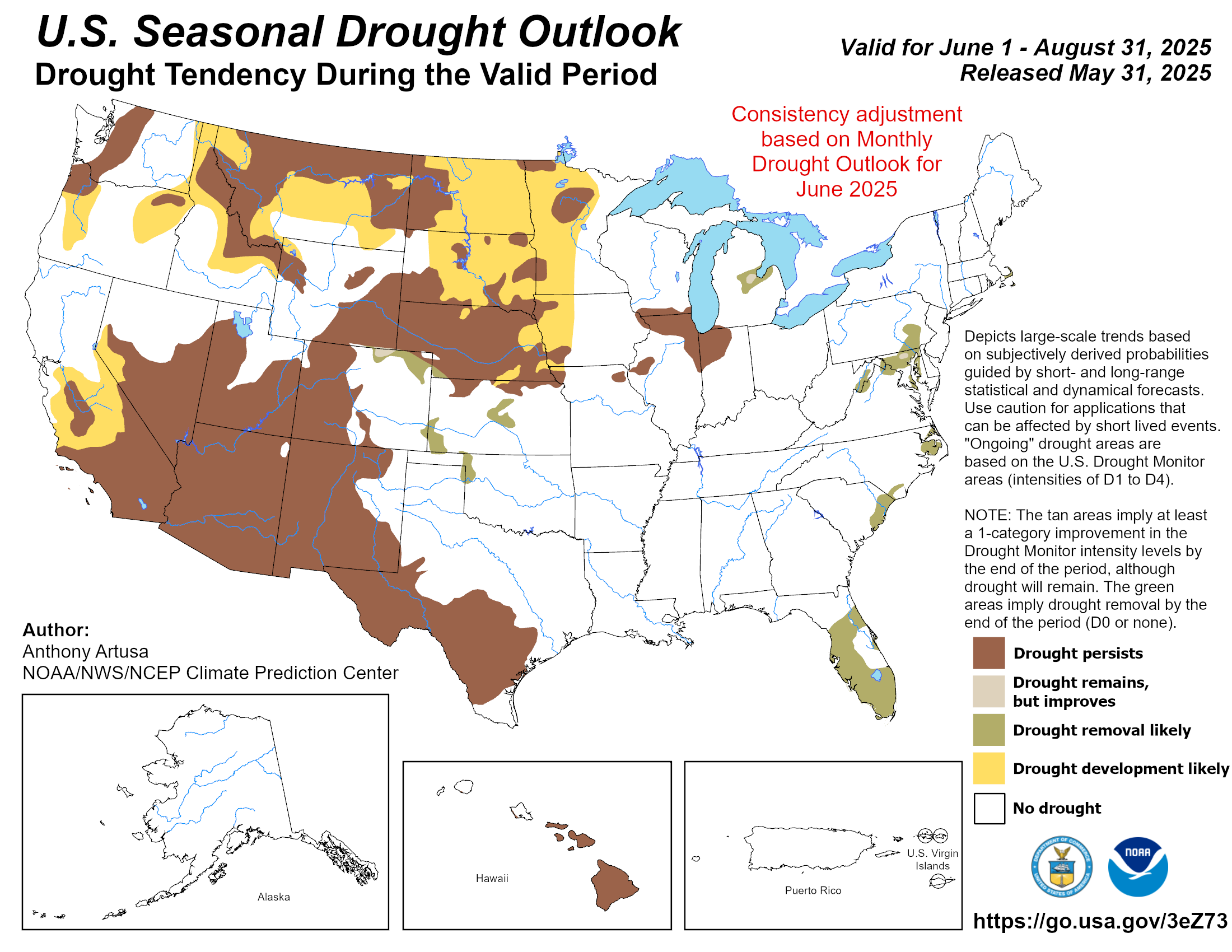

Figure 7b: Three-month temperature outlook for November-December-January 2025–2026 (source).

Figure 7c: Three-month precipitation outlook for November-December-January 2025–2026 (source).