
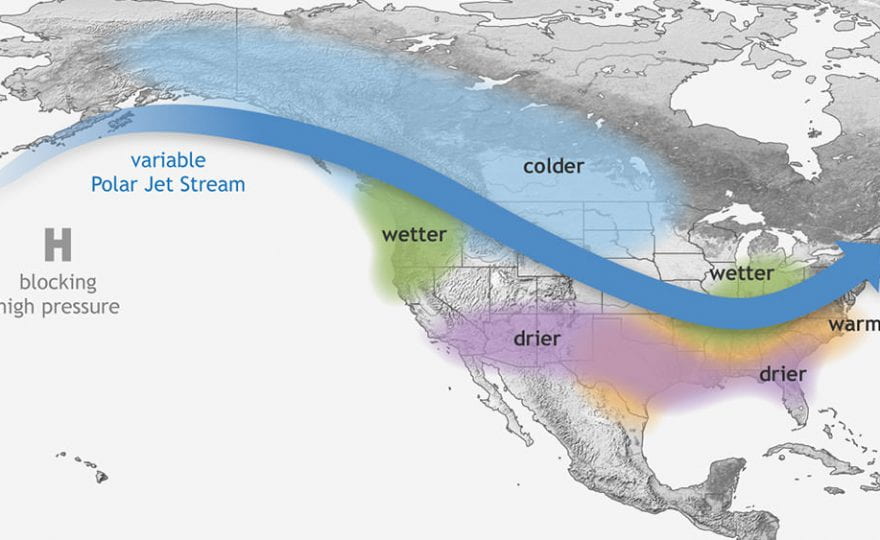
La Niña is here with an 87 percent chance of staying through February. Drought intensified across the state, expanding from about 5 percent four weeks ago to 19 percent today. Most of the state is expected to be in drought over the next three months.
Author: Robert Mace
Robert Mace is the Executive Director and Chief Water Policy Officer at The Meadows Center for Water and the Environment and a Professor of Practice in the Department of Geography at Texas State University. Robert has over 30 years of experience in hydrology, hydrogeology, stakeholder processes, and water policy, mostly in Texas.

think+water: Fecal Matter in the Edwards Recharge Zone, PFASs in Galveston Bay, and a Review of Reservoirs in Texas
This month we explore academic publications on the topics of developing a numerical surface-water/groundwater model for the lower San Antonio River Basin, using a geophysical technique—a gradient self-potential logging survey—to assess surface water-groundwater interaction on the Rio Grande in the Mesilla Valley, and utilizing a 20-member climate model to learn how a warmer climate could impact future droughts.
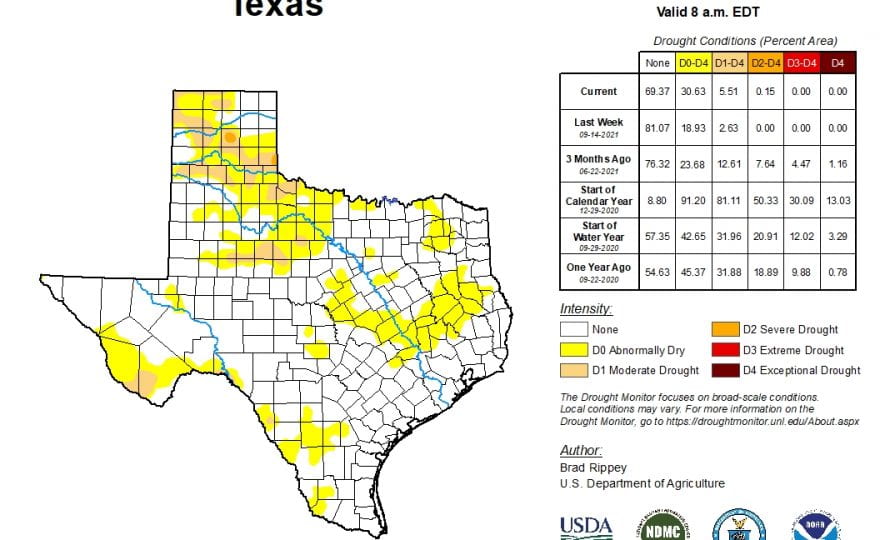
outlook+water: August Has Been Really Dry, Drought Is Back Like a Bad Penny, and There Is a 70-80% Chance of La Niña
Most of the state received less than 25% of normal rainfall. After a near expulsion last month, drought is back with expectations for drought over most of the state by the end of the year. La Niña conditions have a 70-80% chance of starting in the next month or so and continuing through the winter.
think+water: Surface Water–Groundwater Interaction in the San Antonio River, Surface Water–Groundwater Interaction in the Rio Grande in Mesilla Valley, and the Drought of the 1950s if the World Was 3° Celsius Warmer
This month we explore academic publications on the topics of developing a numerical surface-water/groundwater model for the lower San Antonio River Basin, using a geophysical technique—a gradient self-potential logging survey—to assess surface water-groundwater interaction on the Rio Grande in the Mesilla Valley, and utilizing a 20-member climate model to learn how a warmer climate could impact future droughts.

think+water: Climate Change Education in DFW, Mussels and the 2011 Drought, and Sampling Springs in the Edwards Aquifer System
This month we explore academic publications on the topics of barriers and opportunities for climate change education in Texas, understanding the impacts of drought on mussels in the Colorado River Basin, and tracing the origin of water and hydrological processes in the Edwards Aquifer system.